Flour Grams to Cups
All-purpose flour at 120g per cup, with the spoon-and-level method explained.
Open Flour GuideChoose your conversion method and get accurate results instantly
Convert a single ingredient quickly and accurately
Dedicated charts and tips for the ingredients and units people convert most
All-purpose flour at 120g per cup, with the spoon-and-level method explained.
Open Flour GuideGranulated sugar at 200g per cup, plus brown and powdered sugar densities.
Open Sugar GuideButter at 227g per cup, with quick cup and US stick references.
Open Butter GuideUncooked white rice at 185g per cup, with a cooked-versus-uncooked note.
Open Rice GuideMilk and other thin liquids at 245g per cup, close to their millilitre volume.
Open Milk GuideAn exact volume ratio of 16 tablespoons per cup, no ingredient density needed.
Open Tablespoon GuideFluid ounces convert at a fixed 8 fl oz per cup; weight ounces need density.
Open Ounces GuideThe baking notebook
Practical guides for converting, weighing, and scaling recipes without the guesswork.
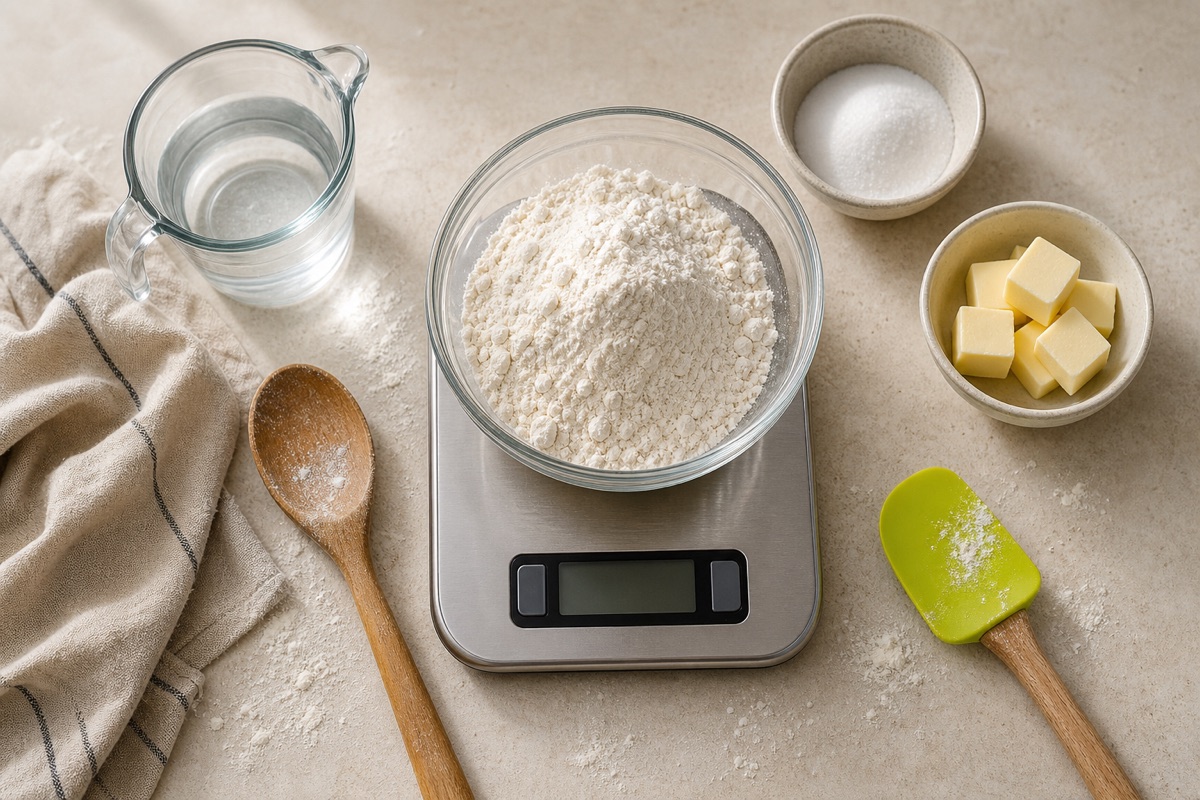
A reliable grams-to-cups conversion starts with the ingredient, not a universal number. Learn the formula, see examples, and avoid the mistakes that change a bake.
Read the guide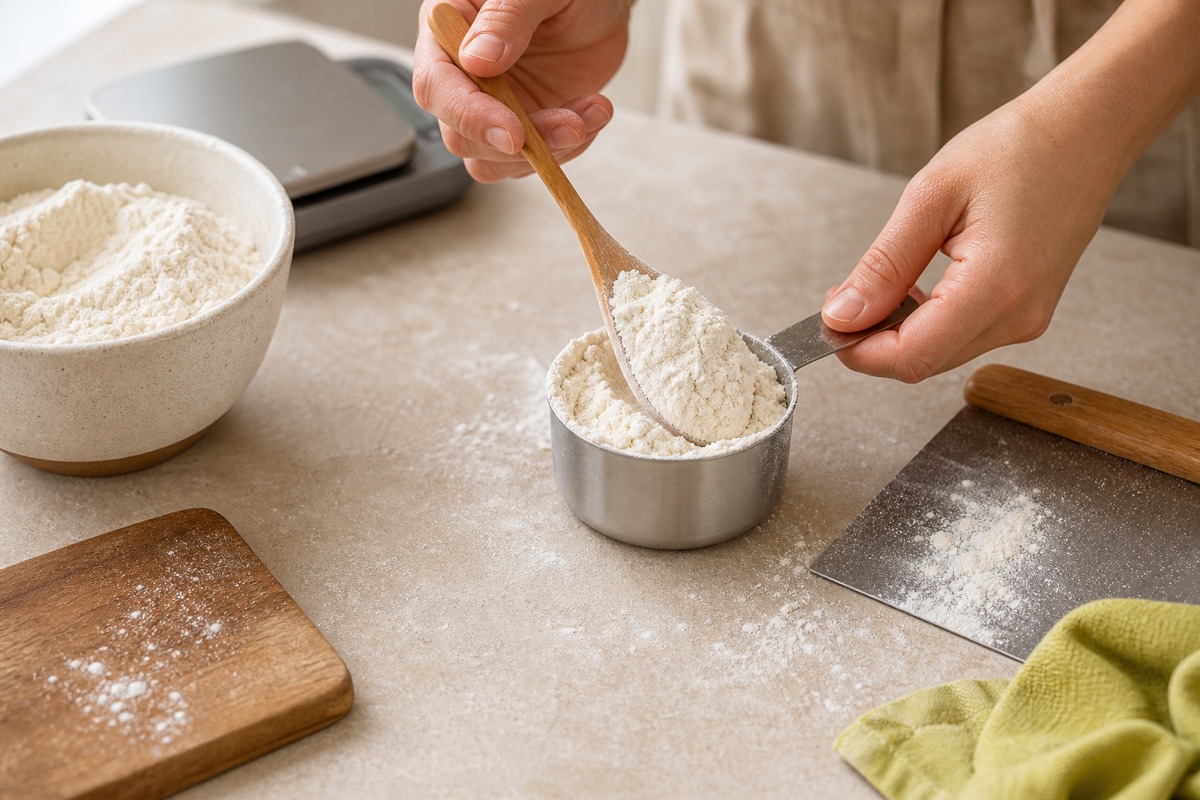
Flour can change weight simply because of how you fill the cup. Compare weighing, spoon-and-level, and direct scooping before your next batch.
Read the guide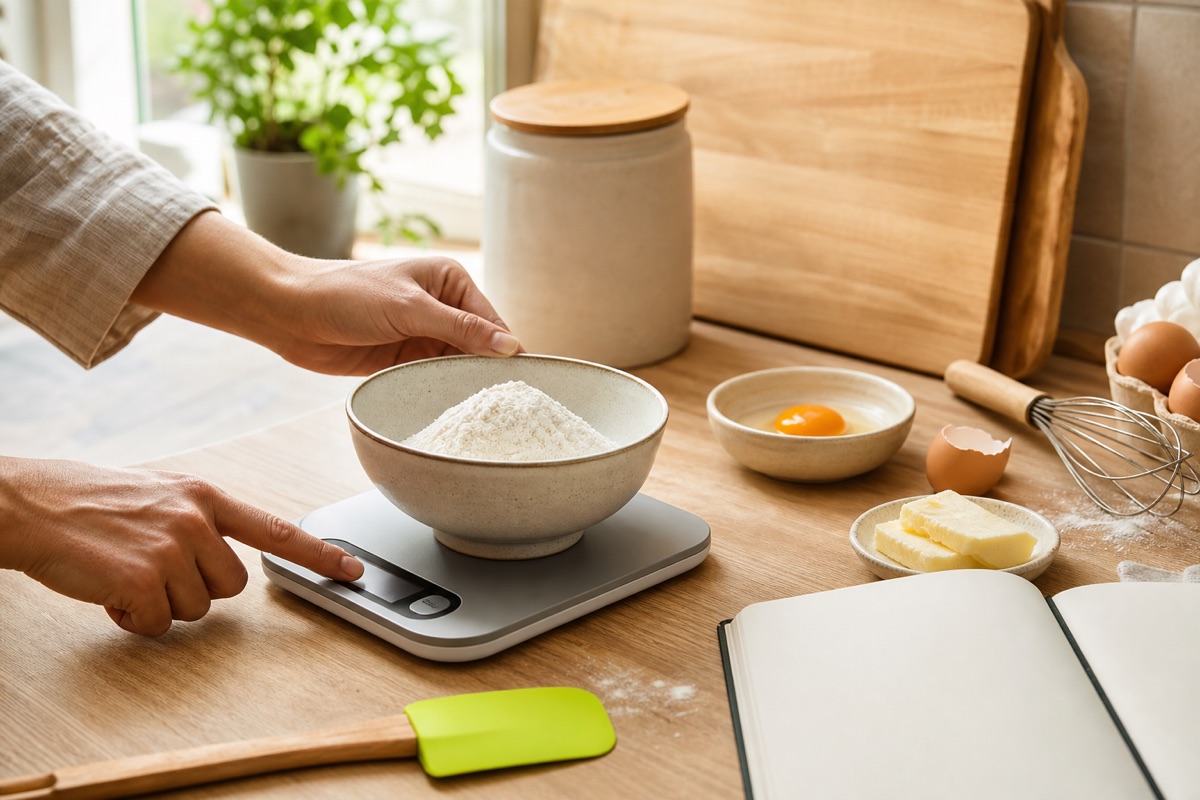
A scale does more than make flour accurate. It speeds up prep, reduces dishes, simplifies recipe scaling, and makes a successful bake easier to repeat.
Read the guide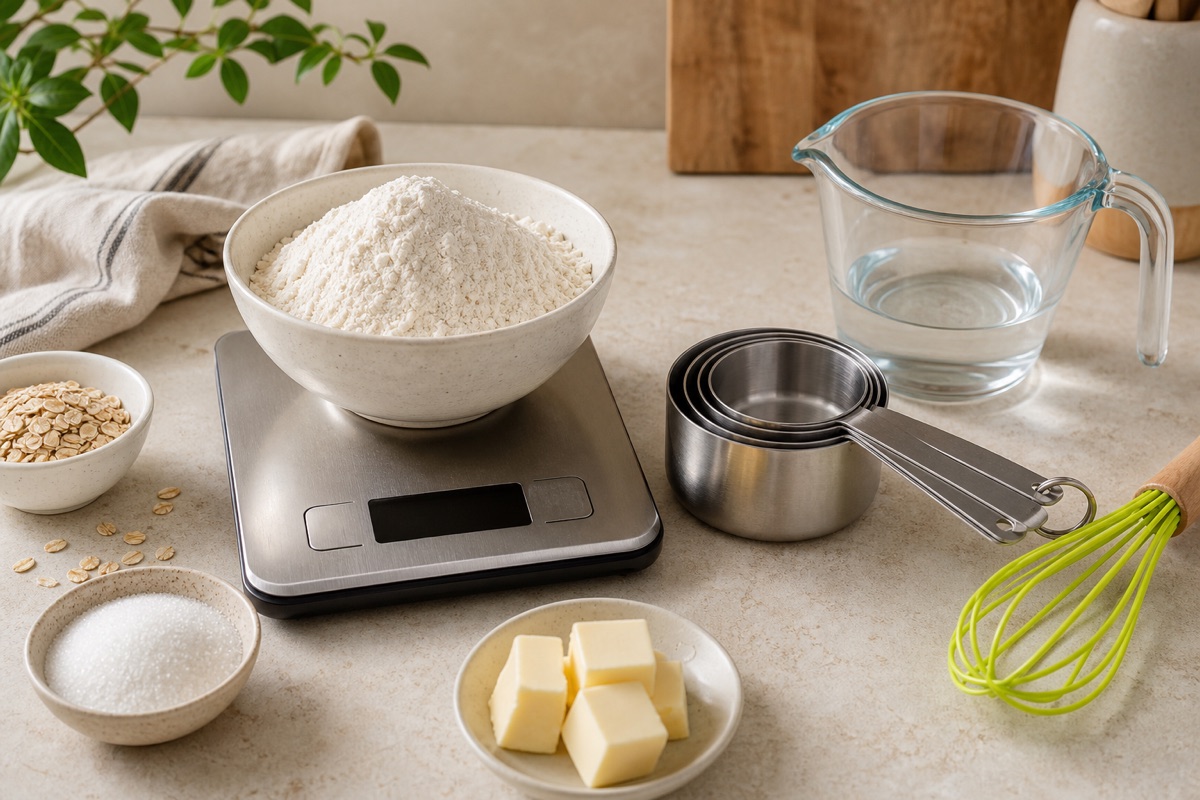
Grams deliver repeatability; cups deliver familiarity. See where each method performs well and why ingredient density matters whenever you move between them.
Read the guide
Scaling is more than doubling every line. Use one multiplier, weigh ingredients, manage eggs and leavening, and keep pan depth under control.
Read the guideA reliable grams-to-cups conversion starts with the ingredient density, not a universal number. Learn the formula, explore common ingredient densities, and bake with repeatable confidence.
Read the guideNever confuse volume fluid ounces with scale weight ounces again. Master the 8 fl oz per cup rule and learn how to convert dry ingredients accurately.
Read the guideScaling up a recipe or cooking without measuring cups? Learn the golden 16-to-1 rule, fractional equivalents, and how to measure butter sticks flawlessly.
Read the guideA gram is a metric unit of mass equal to one-thousandth of a kilogram. Measuring ingredients by weight avoids variations caused by scooping, packing, humidity, and settling.
For baking, grams make recipes repeatable and easier to scale. A measured 100 grams remains 100 grams in every kitchen.
A US customary cup is a volume measurement of about 236.6 milliliters. Because a cup measures space rather than weight, every ingredient has a different gram equivalent.
A cup of flour can weigh around 120 grams, while the same cup filled with granulated sugar weighs about 200 grams. That is why ingredient-specific conversions are essential.
The calculator selects the grams-per-cup value for your chosen ingredient, divides the weight by that value, and returns a practical kitchen fraction and decimal estimate.
Use these quick-reference values or open the complete grams-to-cups conversion chart.
| Grams | Cups |
|---|---|
| 30g | ¼ cup |
| 60g | ½ cup |
| 120g | 1 cup |
| 180g | 1 ½ cups |
| 240g | 2 cups |
| Grams | Cups |
|---|---|
| 50g | ¼ cup |
| 100g | ½ cup |
| 200g | 1 cup |
| 300g | 1 ½ cups |
| 400g | 2 cups |
| Grams | Cups |
|---|---|
| 57g | ¼ cup |
| 113g | ½ cup |
| 227g | 1 cup |
| 340g | 1 ½ cups |
| 454g | 2 cups |
| Grams | Cups |
|---|---|
| 55g | ¼ cup |
| 110g | ½ cup |
| 220g | 1 cup |
| 330g | 1 ½ cups |
| 440g | 2 cups |
These typical weights apply to one level US cup. See all supported values on the ingredient density chart.
120g/cup
spooned & levelled
200g/cup
level cup
227g/cup
softened or melted
220g/cup
firmly packed
90g/cup
old-fashioned
237g/cup
US cup
170g/cup
semi-sweet
340g/cup
level cup
143g/cup
whole
85g/cup
unsweetened
288g/cup
fine grain
192g/cup
level cup
About 2.08 US cups using 120 grams per cup. For repeatable results, spoon flour into the measuring cup and level the top.
Yes, when its grams-per-cup weight is known. Ingredient density matters, so flour, sugar, butter, and liquids need different conversion values.
Weight measurements are consistent and easy to scale. One hundred grams is the same amount regardless of how an ingredient is scooped or packed.
No. A cup measures volume and grams measure weight. For example, 240 grams of flour is about 2 cups, while 240 grams of water is about 1 cup.
Most recipes mean firmly packed brown sugar unless stated otherwise. Packed brown sugar weighs substantially more per cup than loosely filled sugar.
No. Conversion and recipe parsing happen locally in your browser, and the current tool does not send recipe text to a server.