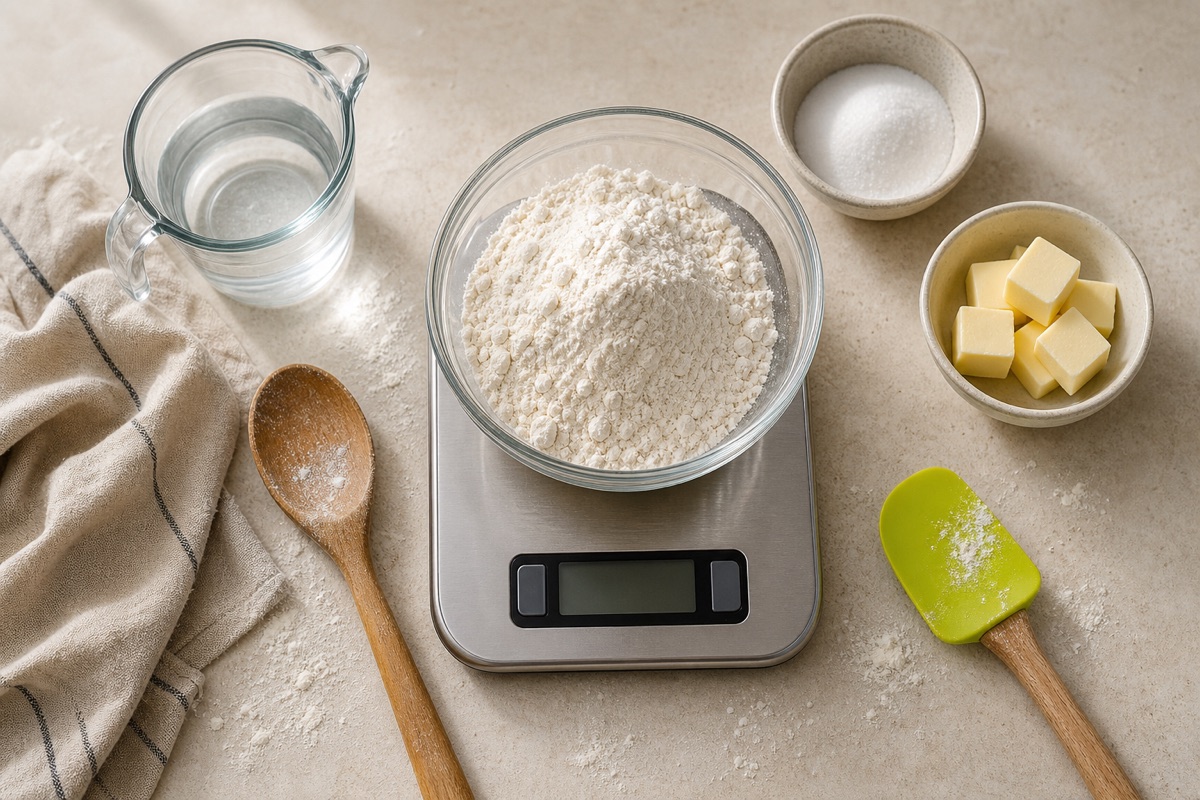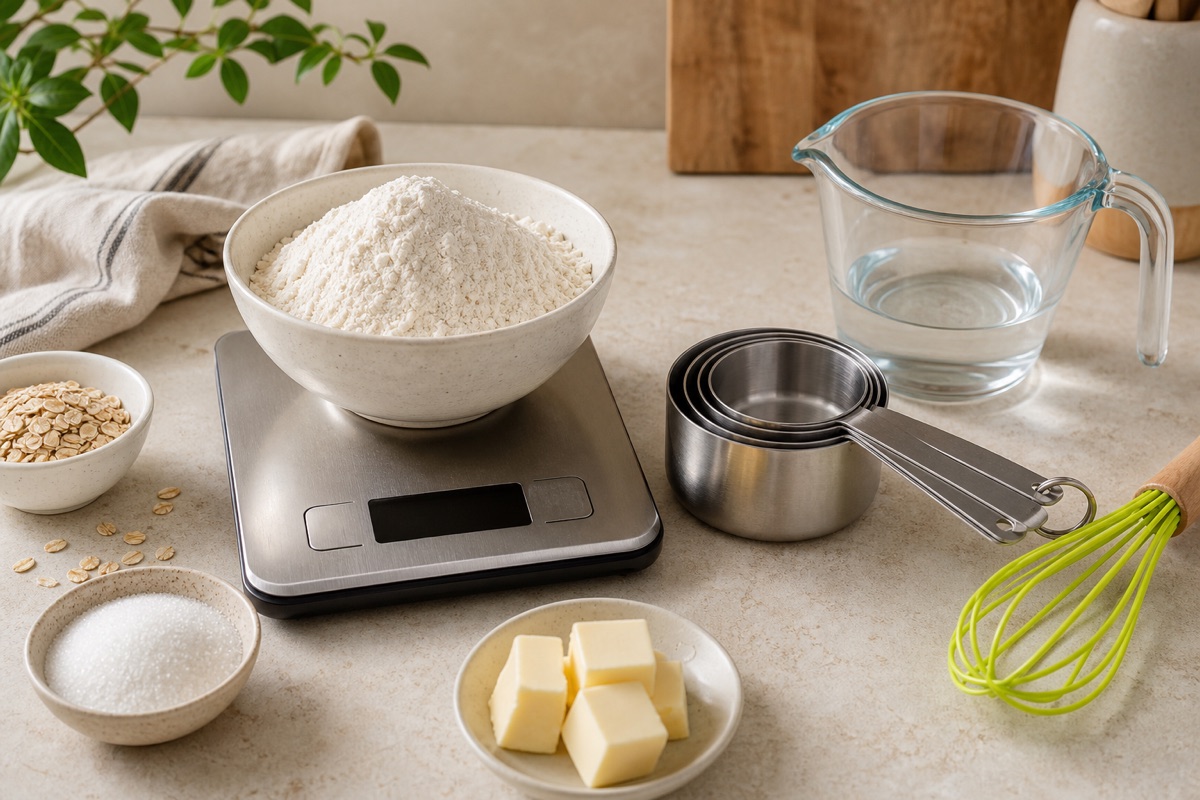
The most reliable way to measure flour is to weigh it on a digital kitchen scale. If you do not have a scale, fluff the flour, spoon it gently into a dry measuring cup, and sweep the excess away with a straight edge. Do not dip the cup into the bag or tap it on the counter, because both actions compact flour and can add more than the recipe intended.
Flour creates structure by forming a network with liquid and, in many recipes, gluten. Too much can make cookies thick and dry, cakes firm, quick breads crumbly, and yeast dough harder to hydrate. A careful measurement protects the balance that the recipe developer tested.
Quick facts
- Best method
- Weigh flour directly in grams on a digital kitchen scale.
- Volume backup
- Fluff, spoon into a dry cup, then level without tapping.
- Working reference
- This site uses 120 grams for one level US cup of all-purpose flour.
- Cup choice
- Use a rimmed dry measuring cup, not a graduated liquid jug.
- Recipe rule
- Follow the recipe author's stated flour weight when one is provided.
Why a cup of flour can vary so much
Flour contains many small particles with air spaces between them. Shipping, pouring, and storage allow those particles to settle. A measuring cup pushed into a bag packs them even more tightly, while sifted or freshly aerated flour occupies more space for the same weight.
That is why different bakers can fill identical cups and still produce different weights. The cup has not changed; the quantity of flour compressed inside it has. A recipe written only in cups silently depends on the author's filling technique.
Our flour grams to cups guide uses 120 grams per level US cup for all-purpose flour. Other flours and recipe publishers may use different standards, so keep the named flour and stated source together.
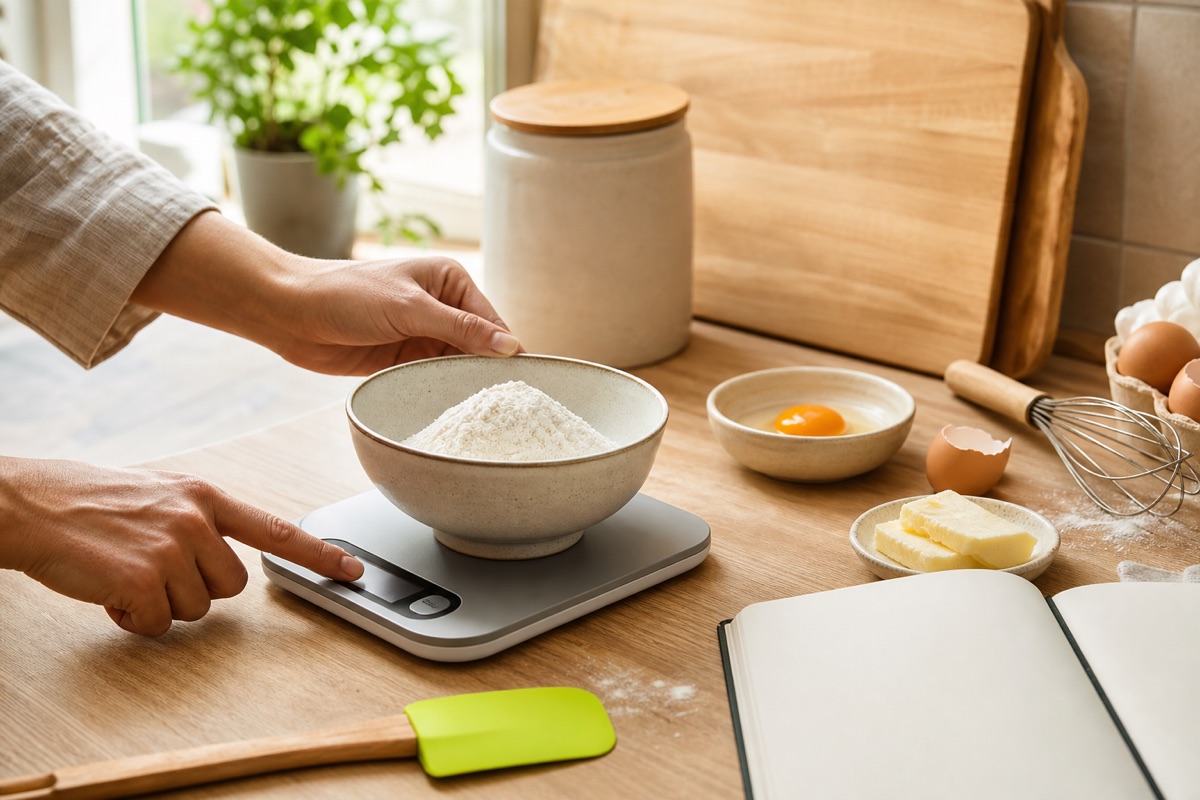
How to weigh flour with a digital scale
Set the scale on a firm surface
A level counter gives the sensors a stable base. Avoid a soft towel or an uneven stovetop.
Choose grams
Use the unit button until the display shows grams rather than ounces, fluid ounces, or another mode.
Place the mixing bowl on top
Use the bowl you plan to mix in whenever practical. This reduces dishes and prevents transfer losses.
Press tare
The display should return to zero with the empty bowl in place.
Add flour slowly
Spoon or pour until you reach the recipe weight. Remove a little with a spoon if you overshoot.
When a recipe calls for 240 grams of flour, stop at 240 grams. There is no need to convert it into cups first. If the recipe gives cups only, use the recipe author's conversion chart when available or a transparent reference such as 120 grams per cup for all-purpose flour.
The interactive converter is useful when you need to move from an unfamiliar gram amount to cups, but a scale should remain your first choice when the recipe already provides a weight.
How to measure flour without a scale
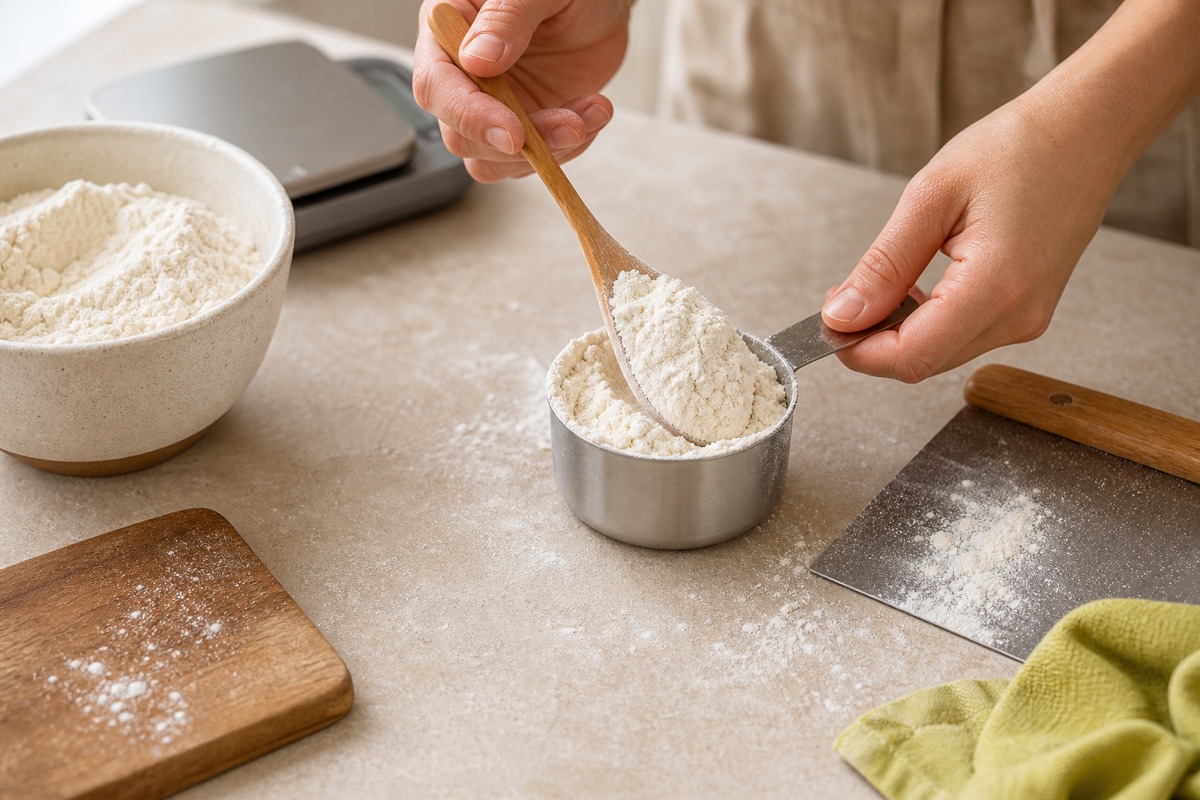
Start by stirring the flour in its container with a spoon or whisk. This loosens settled flour without sifting it. Use the spoon to sprinkle flour into a dry measuring cup until it rises slightly above the rim.
Slide the flat edge of a knife or bench scraper across the top in one clean motion. Let the excess fall back into the container. Do not press down, shake the cup, or tap its sides. Those actions remove air and increase the weight.
Use individual dry measures for one cup, one half, one third, and one quarter. A clear liquid cup is designed to be read at a marked line and leaves empty space above the liquid. That makes it difficult to level a dry ingredient cleanly at the rim.
| Method | Consistency | Best use | Main risk |
|---|---|---|---|
| Digital scale | Highest | All baking | Wrong unit or missed tare |
| Spoon and level | Good with practice | No scale available | Packing while filling |
| Direct scoop | Low | Not recommended | Too much compacted flour |
| Liquid measuring cup | Low for flour | Liquids only | Hard to level accurately |
Measure before or after sifting?
Read the recipe wording carefully. “One cup flour, sifted” generally means measure the flour first and sift it afterward. “One cup sifted flour” generally means sift first and then measure the aerated flour. Weight-based recipes avoid much of this ambiguity because 120 grams remains 120 grams before and after sifting.
Sifting is not always a measuring instruction. It can remove lumps, distribute cocoa or leavening, and aerate dry ingredients for a delicate mixture. Follow the recipe's sequence rather than assuming every flour needs to be sifted.
Whole-wheat flour, cake flour, bread flour, rye flour, and nut flours do not necessarily share one cup weight. Their particle size and composition differ. Select the exact flour whenever you convert a recipe.
Signs that a recipe contains too much flour
Cookie dough may look crumbly, fail to spread, or bake into dry mounds. Cake batter may become unusually stiff and the crumb may feel tight. Muffins and quick breads can turn dry, while bread dough may resist mixing and need more liquid than the recipe predicts.
Those symptoms have other causes, including overmixing, oven temperature, substitution, and incorrect fat or liquid measurements. Check your process before automatically adding liquid. If you scooped flour directly, an excessive flour measurement becomes a strong possibility.
For the next bake, weigh the flour and record the result. A repeatable method is more valuable than adjusting each batch after the batter has already moved away from the tested ratio.
Fact check
Common misconceptions
A level scoop is always accurate
A directly scooped cup can be compacted before its top is leveled.
All flour weighs the same per cup
Flour type, milling, aeration, and publisher standards can change the reference.
Sifting and fluffing are identical
Fluffing loosens settled flour; sifting passes it through a screen and may serve other recipe purposes.
Frequently asked questions
How many grams are in one cup of flour?
This site uses 120 grams per US cup of all-purpose flour, a common baking reference.
Should I pack flour into a measuring cup?
No. Flour should be gently filled and leveled unless a recipe explicitly gives another method.
Can I scoop flour if I level it afterward?
It is not recommended. Scooping can compact flour below the rim before you level the top.
What does tare mean on a scale?
Tare resets the display to zero so the bowl's weight is excluded.
Should flour be sifted before measuring?
Only when the recipe wording or method tells you to sift first.
The takeaway
Measure with a clear method
For repeatable baking, weigh flour in grams. When you must use cups, fluff, spoon, and level without compacting. That small change keeps the flour closer to the amount the recipe intended and removes one of the most common sources of dry, dense results.
Open the grams to cups converter